

Stay Ahead of Threats: Embracing Zero Trust Network Access
August 27, 2023Stay Ahead of Threats: Embracing Zero Trust Network Access
September 19, 2024Stay Ahead of Threats: Embracing Zero Trust Network Access
Intro
With the increase of cyber threats, organizations must stay ahead of the game to ensure their data remains secure. Zero Trust Network Access (ZTNA) is a modern security approach that challenges the traditional perimeter-based model by assuming that no user or device should be inherently trusted, regardless of their location. Instead of relying solely on the network’s perimeter for protection, ZTNA focuses on verifying and validating users’ identities and their devices before granting access to resources.
Understanding the Flaws of Traditional Network Access
Traditional network access, while widely used, has several inherent flaws that make it susceptible to cyber threats. One of the main weaknesses is the reliance on perimeter-based security measures. This approach assumes that once a user is inside the network, they can be trusted and given unrestricted access to resources. However, this assumption is no longer valid in today’s evolving threat landscape.
Another flaw of traditional network access is the lack of granular access control. In a traditional setup, users are typically granted access to entire networks or systems, even if they only need access to a specific application or data set. This creates unnecessary risks as it increases the potential attack surface and leaves sensitive data exposed.
Furthermore, traditional network access often lacks strong authentication methods. Password-based authentication is still widely used, despite being susceptible to various attacks such as phishing and brute-force attempts. These methods can easily be compromised, leading to unauthorized access to critical resources.
What is Zero Trust and How Does it Work?
Zero Trust Network Access (ZTNA) is a security framework that challenges the traditional model of network access by assuming that no user or device can be trusted, even if they are within the network perimeter. In a Zero Trust model, access to resources is based on strict verification and continuous authentication, regardless of the user’s location or the network they are connecting from.
The key concept behind ZTNA is the principle of “never trust, always verify.” This means that every user and device, whether internal or external, is treated as potentially untrusted until proven otherwise. ZTNA implements strong authentication methods such as multi-factor authentication (MFA), biometrics, and digital certificates to ensure that only authorized users gain access to specific resources.
Additionally, ZTNA enforces granular access control, allowing organizations to grant access on a need-to-know basis. Instead of providing blanket access to entire networks or systems, ZTNA limits access to only the necessary applications or data sets, reducing the potential attack surface.
To achieve this, ZTNA leverages various technologies such as micro-segmentation, software-defined perimeters, and encryption. These technologies enable organizations to create secure, isolated segments within their networks, making it more difficult for attackers to move laterally or access sensitive information.
Overall, ZTNA provides organizations with a comprehensive and adaptive security approach that mitigates the risks associated with traditional network access. By implementing ZTNA, organizations can establish a robust security posture that protects their networks, resources, and sensitive data from unauthorized access and potential cyber threats.
Benefits of Zero Trust Network Access
Zero Trust Network Access (ZTNA) offers numerous benefits for organizations looking to enhance their network security and protect their data from cyber threats. One of the key advantages of ZTNA is the enhanced security it provides through continuous verification and authentication. By implementing strong authentication methods like multi-factor authentication (MFA) and biometrics, ZTNA ensures that only authorized users gain access to resources, minimizing the risk of unauthorized access.
Another benefit of ZTNA is the granular access control it enables. Organizations can grant access on a need-to-know basis, ensuring that users only have access to the specific applications or data sets required for their roles. This reduces the potential attack surface and limits the exposure of sensitive information.
ZTNA also offers improved visibility and control over user behavior. With detailed logs and monitoring capabilities, organizations can detect and prevent unauthorized activities or malicious insider threats more effectively. This increased visibility helps organizations proactively identify and respond to potential security incidents.
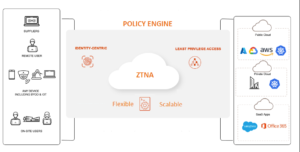
Furthermore, ZTNA provides organizations with scalability and flexibility. As organizations continue to adopt cloud-based technologies and remote work environments, ZTNA allows for secure access from any location or device, without compromising on security.
Implementing Zero Trust in Your Organization
Now that you understand the benefits of Zero Trust Network Access (ZTNA), it’s time to explore how to implement this powerful security framework in your organization. While transitioning to Zero Trust may seem daunting, with careful planning and execution, you can successfully enhance your network security and protect your data from cyber threats.
The first step in implementing Zero Trust is conducting a comprehensive assessment of your current network infrastructure and security practices. This will help you identify potential vulnerabilities and determine the scope of the implementation process. It’s essential to involve key stakeholders, such as IT teams, security professionals, and senior management, to ensure a collaborative and efficient approach.
Next, develop a roadmap outlining the specific steps and milestones for transitioning to a Zero Trust architecture. This roadmap should include tasks such as establishing strong authentication methods, implementing granular access controls, and integrating micro-segmentation techniques. It’s crucial to prioritize the implementation based on risk and criticality, gradually transitioning your network to the Zero Trust model.
Training and education are vital components of implementing Zero Trust in your organization. Ensure that all employees, from executives to end-users, are educated about the principles and best practices of Zero Trust. This will help create a security-aware culture and ensure that everyone understands their role in maintaining a secure environment.
Regular monitoring and evaluation are crucial to the success of your Zero Trust implementation. Continuously monitor and analyze network activity, user behavior, and access controls to identify any potential anomalies or security breaches. This proactive approach will allow you to detect and respond to threats promptly.
Finally, consider engaging with industry experts or hiring consultants to assist with the implementation process. Their expertise can help streamline the transition and provide valuable insights and guidance.
Key Components of Zero Trust Architecture
To fully understand and implement Zero Trust Network Access (ZTNA), it is essential to delve into its key components. These components work together to create a secure and adaptive network environment that protects organizations from cyber threats.
One crucial component of Zero Trust Architecture is strong authentication. This involves implementing multi-factor authentication (MFA), biometrics, and digital certificates to ensure that only authorized users gain access to resources. By utilizing these authentication methods, organizations can add an extra layer of security and reduce the risk of unauthorized access.
Another important component is granular access control. Rather than providing blanket access to entire networks or systems, organizations can limit access to only the necessary applications or data sets required for a user’s role. This reduces the attack surface and minimizes the exposure of sensitive information.
Micro-segmentation is another critical component of Zero Trust Architecture. It involves creating isolated segments within the network, which makes it difficult for attackers to move laterally and access sensitive data. This technique ensures that even if one segment is compromised, the rest of the network remains protected.
Encryption is also a key component of Zero Trust Architecture. By encrypting data at rest and in transit, organizations can safeguard their information from unauthorized access or interception. This adds an additional layer of protection, making it more challenging for attackers to exploit vulnerabilities.
Overcoming Common Challenges When Transitioning to Zero Trust
Transitioning to a Zero Trust Network Access (ZTNA) model can be a complex process, and organizations may face several common challenges along the way. One of the main challenges is the cultural shift that comes with implementing a new security framework. Moving from a traditional network access model to a Zero Trust model requires buy-in from all stakeholders and a shift in mindset towards the principle of “never trust, always verify.” This may involve educating employees about the importance of security and the need for continuous authentication.
Another challenge is the integration of new technologies and systems. Implementing strong authentication methods, granular access controls, and micro-segmentation techniques may require significant changes to existing infrastructure and processes. Organizations may need to invest in new hardware, software, or cloud solutions to support their Zero Trust implementation. Additionally, integrating these technologies seamlessly and ensuring compatibility with existing systems can be a technical challenge that requires careful planning and expertise.
Furthermore, the complexity of implementing and managing a Zero Trust model can be overwhelming. It’s important to have a clear roadmap and timeline for the transition, as well as a dedicated team responsible for overseeing the implementation process. Regular monitoring and evaluation are crucial to identify and address any potential issues or gaps in the security framework. Engaging with industry experts or hiring consultants can also provide valuable guidance and support throughout the transition.
Case Studies of Successful Zero Trust Implementations
Real-world examples of successful Zero Trust Network Access (ZTNA) implementations demonstrate the effectiveness and value of this security framework. Let’s explore a few case studies that highlight organizations that have embraced Zero Trust and achieved enhanced network security.
- Case Study 1: Major Financial Institution
A leading financial institution recognized the need to strengthen its network security and protect its sensitive customer data. By implementing a Zero Trust model, they were able to enforce strong authentication measures and granular access controls. This allowed them to limit access to critical applications and data based on user roles and responsibilities. As a result, they significantly reduced the risk of unauthorized access and potential data breaches. With continuous monitoring and evaluation, they were able to quickly identify and respond to any security incidents, minimizing the impact on their operations.
- Case Study 2: Global Technology Company
A global technology company with a large workforce and distributed network faced the challenge of securing remote access to their systems. They implemented a Zero Trust architecture that provided secure access from any location or device. By utilizing multi-factor authentication and micro-segmentation techniques, they were able to ensure that only authorized users had access to specific resources. This improved their overall security posture and protected their sensitive intellectual property from potential threats.
- Case Study 3: Government Agency
A government agency sought to enhance its network security to protect critical infrastructure and sensitive information. By adopting a Zero Trust model, they were able to implement strong authentication methods, granular access controls, and encryption. This created a secure environment that significantly reduced the risk of unauthorized access and potential data leaks. With the ability to monitor user behavior and detect anomalies, they were able to identify and mitigate potential security breaches before they could cause significant damage.
Future of Network Security: Why Zero Trust is Here to Stay
The future of network security lies in the adoption of Zero Trust Network Access (ZTNA). As cyber threats continue to evolve and become more sophisticated, organizations need a security framework that can keep up with these challenges. Zero Trust provides a proactive and adaptive approach to network security that is built on the principle of “never trust, always verify.”
One of the reasons why Zero Trust is here to stay is its ability to address the flaws of traditional network access. Traditional security measures, such as perimeter-based defenses and password-based authentication, are no longer sufficient in today’s threat landscape. Zero Trust, on the other hand, focuses on continuous verification and authentication, ensuring that only authorized users have access to resources.
Another reason why Zero Trust is the future of network security is its scalability and flexibility. With the rise of remote work and cloud-based technologies, organizations need a security framework that can adapt to these changes. Zero Trust enables secure access from any location or device, without compromising on security.
Furthermore, Zero Trust provides organizations with enhanced visibility and control over user behavior. By continuously monitoring network activity and access controls, organizations can detect and respond to potential security incidents more effectively.
Thanks,
Amit Kumar Sharma
amit@stellarcomouters.net
